BLOG
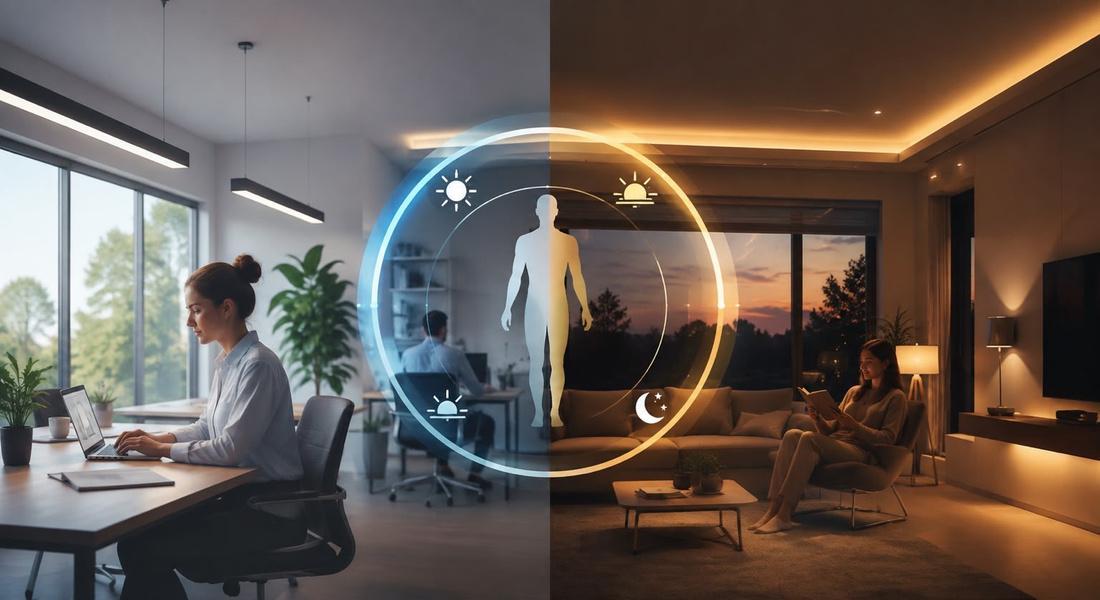
For thousands of years, humans lived in rhythm with the sun: cool and bright in the morning, warm and dim in the evening. Today, however, we spend most of our time indoors, under fixtures that emit the same light at 9 am and 9 pm. Human-centric lighting (HCL) was born to repair this disconnect and is now the number one lighting topic on the agenda of architects and employers in Europe.
Human-centered lighting is an approach that supports the human biological clock (circadian rhythm) by adjusting the color temperature and intensity of artificial light to match the natural rhythm of daylight. The goal is not just to see, but to support alertness, focus, and sleep quality with the right light at the right time.
Our body's internal clock, which regulates the sleep-wake cycle, receives its strongest signal from light. In the morning, cool white and bright light awakens the mind; in the evening, warm and dim light allows the body to enter rest mode. A constant, unchanging light throughout the day works against this cycle: it doesn't stimulate sufficiently during the day and unnecessarily stimulates in the evening.

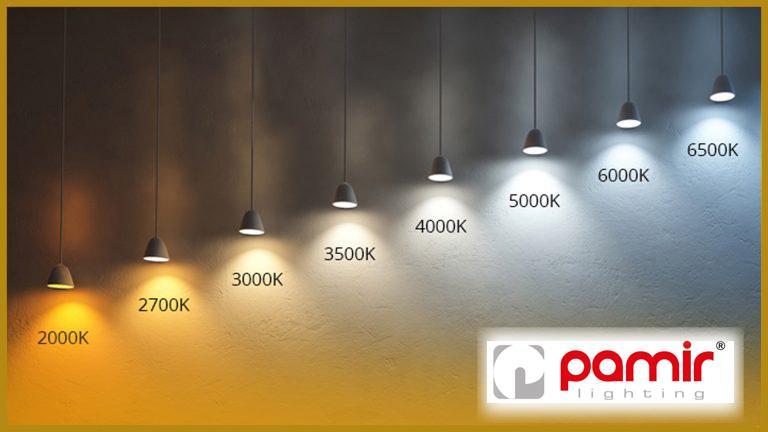
At the heart of human-centered systems are color-temperature adjustable (tunable white) LEDs: warm and cool white channels are driven together within the same luminaire, and as the ratio changes, the light shifts from a warm 2700K to a cool 6500K tone. These transitions are automatically managed by digital control protocols such as DALI and time/sensor scenarios: the light cools and brightens spontaneously in the morning, and softens towards evening.
In Europe, human-centered lighting is no longer just theory, but practice: circadian systems are being installed in schools to help students focus in class, in hospitals to regulate patients' sleep patterns and recovery processes, and in offices to improve employee productivity.

1. First, light quality: The circadian scenario only makes sense with a solid foundation of light: changing the color temperature alone won't provide comfort without flicker-free drivers, low UGR, and high CRI.
2. Correct control infrastructure: Tunable white luminaires should be planned with addressable control systems like DALI; scenarios are designed in-house, not afterwards.
3. Integration with daylight: Natural light is measured with sensors; artificial light complements it rather than imitates it. Window areas and interior spaces are considered separately.
4. Set the scenario according to the space: Focus hours in the office, class blocks in the school, night mode in healthcare — the correct curve is different for each space.
For details on these criteria, you can check out our blog posts: What is UGR?, What is CRI?, and Why Do Lights Flicker?
In our Konya factory, we offer the fundamentals required for human-centered scenarios as standard in the luminaires we produce: flicker-free and dimmable drivers, SDCM<3 color consistency, high CRI options, and LUMILEDS / OSRAM / NICHIA LED modules with a lifespan of 60,000 hours. We plan the product and driver configuration together according to your project's control scenario and deliver it with a 5-year warranty.
Are human-centered lighting and smart lighting the same thing?
No, but they are related: smart lighting describes the control technology, while human-centered lighting describes the purpose of using this control for human health. HCL uses smart control infrastructure as a tool.
Is it applicable at home?
Yes. Simple daytime scenarios can be set up at home with dimmable and color temperature adjustable luminaires: cool and bright during the day, warm and dim in the evening.
Which color temperatures are used?
A typical scenario moves within a range from approximately 2700K warm tones to 6500K cool tones during the day; the shape of the curve is designed according to the use of the space.
Does it increase energy consumption?
Usually the opposite: LED-based human-centered systems also increase energy efficiency in most projects because sensor and scenario control reduce unnecessary usage.
OUR LATEST POSTS
 TR
TR
 DE
DE
 FR
FR
 AR
AR