BLOG
When buying a light fixture or bulb, the box now shows lumens instead of watts, and the most common question we hear is: "How many lumens are enough for my living room?" There's a quick preliminary answer: an approximate calculation based on the area and the desired illumination level. However, this calculation is only a starting point; the correct fixture selection is clarified with a photometric calculation. In this guide, you will find approximate calculations, room-by-room recommended values, and factors that affect the result.
Lumen (lm) is the total amount of light emitted by a light source. Lux (lx) is the intensity of this light falling on a surface: 1 lux = 1 lumen per 1 m². So, lumen indicates the power of the source, while lux describes the illumination in a space. Watt, on the other hand, only indicates energy consumption — it is no longer a valid measure of brightness in the LED age. The same lumen value does not produce the same lux result in every space; the illumination level on a surface varies depending on the luminaire's optics, mounting height, and light distribution.
The approximate calculation is based on two pieces of information: the area of the space and the desired illumination level (lux) for that space. This method is for initial assessment; it is not sufficient on its own for the precise selection of luminaires.

For example, if you aim for 150 lux in a 20 m² room for primarily relaxing use, the approximate need is 20 × 150 ≈ 3,000 lumens. This is a preliminary value indicating a rough estimate of the need; it alone does not guarantee the correct fixture selection. Two different fixtures with the same lumen rating can produce different illumination levels in the working plane because their optical structures are different.
The final luminaire and placement decision is determined by photometric calculations that consider the luminaire's photometric data, mounting height, light distribution, usage factor, and maintenance factor. Dividing the total value into layers—general + task + accent lighting—rather than using a single luminaire provides both comfort and flexibility.

While lower values are generally sufficient in relaxation areas, higher values are recommended for areas where visual tasks such as reading, food preparation, and makeup are performed. Two different targets may exist in the same room: 300 lux is sufficient for general lighting in the kitchen, while 500 lux is commonly targeted above the countertop. The values in the table are a starting reference; the exact target will vary depending on the project.
1. Ceiling height: In high ceilings, light spreads over a wider area before reaching the working plane. It's not accurate to give a fixed increase rate in these spaces; the need should be determined by project-based photometric calculations.
2. Surface colors: Dark walls, ceilings, and furniture absorb some of the light; this can increase the lighting needs of the space. Surface reflection ratios are defined as inputs for photometric calculations.
3. Natural light: In spaces with daylight, it is recommended to perform the calculation according to an evening scenario; the level can be reduced during the day with dimmable drivers.
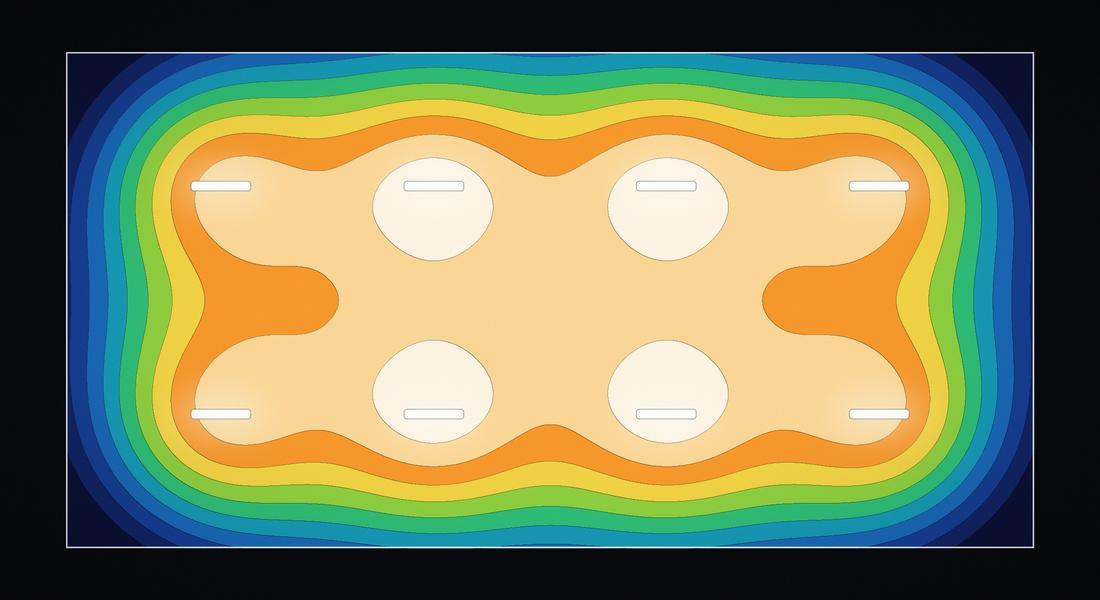
4. Luminaire type and angle: Narrow-angle spotlights concentrate light to a point, while wide-angle and indirect luminaires spread it across the area. The same lumen value creates different light distributions in different optics; therefore, the photometric data of the luminaire is a decisive part of the selection.
5. Usage and maintenance factor: How much of the emitted light reaches the working plane (usage factor) and the decrease in luminous flux due to contamination over time (maintenance factor) directly affect the result. These factors are not included in the approximate calculation; they are defined in the photometric calculation.
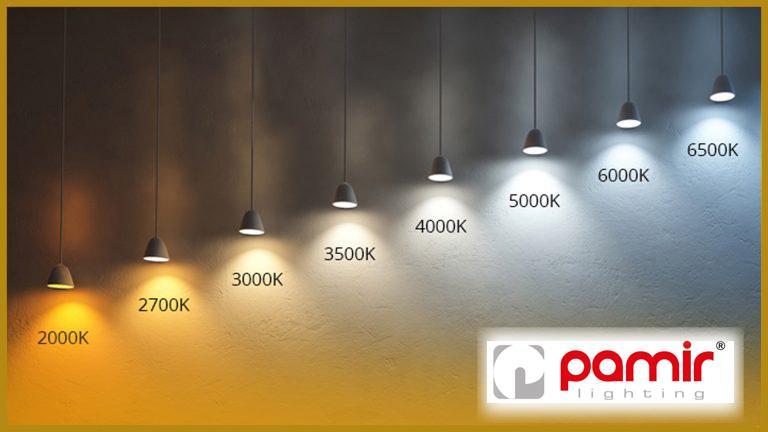
Out of old habit, people look for a "60-watt light bulb," which corresponds to approximately 800 lumens of light. With LED products, efficiency is key: the higher the lumen/watt ratio, the less energy you generally need for the same light. Color temperature (Kelvin) determines the character of the light, not its brightness. Choosing warm or white light doesn't change the lumen requirement.
In a project, the goal is not simply to achieve a specific lux value. Homogeneous light distribution, glare control (UGR), color rendering index (CRI), maintenance factor, and energy efficiency are also integral parts of lighting design. Lumen calculation is a starting point, while photometric calculation is the final result.
From downlights to linear systems, pendant lights to concealed lighting solutions, we manufacture all our products in our factory in Konya. Our standard features include LUMILEDS / OSRAM / NICHIA LED modules with a 60,000-hour lifespan, flicker-free drivers, SDCM<3 color consistency, and a 3-year warranty. Our team is ready to assist you with lumen and placement calculations tailored to your space.

Contact us for your project or browse our catalog.
How many lumens are needed per m²?
For living spaces primarily focused on relaxation, a starting value of 100–200 lumens per m² is generally recommended, while for work and task areas, 300–500 lumens is suggested. The exact value is determined specifically for each project, depending on the use of the space, surface colors, and the optics of the chosen luminaire.
How many watts of LED should I buy?
Look at lumens, not watts. As a reference, an old 60-watt incandescent bulb produces approximately 800 lumens; a modern LED provides the same light with a much lower wattage.
Are too many lumens harmful?
An overly bright space can lead to glare and visual fatigue. Planning close to the target value and gaining flexibility with dimmable drivers is usually the healthiest solution.
Is lumen calculation alone sufficient?
No. The area × target lux approach indicates the magnitude of the need, but luminaire optics, mounting height, light distribution, usage, and maintenance factors will alter the result. The correct luminaire and placement decision is made through photometric calculations.
Does color temperature affect the calculation?
No; the Kelvin value determines the warm/cold character of the light, not its quantity. However, since it directly affects the perception of space, it should be considered together with lumen calculations.
OUR LATEST POSTS
© 2026 Pamir | All Rights Reserved.

Cookie Preferences
We would like to use analytics cookies to understand visitor statistics. If you do not consent, no analytics cookies are used.
 TR
TR
 DE
DE
 FR
FR
 AR
AR